
Blog
How to Choose Board Game Sleeves by Card Size


Board game sleeves are one of the easiest accessories to buy slightly wrong. A pack can look close enough on the shelf, only for the fit to end up too tight, too loose or simply the wrong shape once you open your game. If you are browsing the Sleeves range at GameSummon, the fastest way to narrow the choice is to start with card size rather than brand, finish or colour.
That sounds obvious, but it is where most sleeve-buying mistakes happen. A practical buyer guide starts with measurement, then works outward to texture, pack count and the kind of game you are protecting. This guide uses the live GameSummon range to show how to choose between compact board-game sleeves, standard-size options and larger formats such as tarot or oversize.
Start with Card Size, Not the Game Title
The smartest way to buy sleeves is to ignore the product artwork for a minute and look at dimensions. Different board games use very different card formats, and “board game sleeves” is really a family of sizes rather than one universal product. That is why the wider Board Games catalogue and the Sleeves category work well together: one tells you what you play, the other tells you what size protection you actually need.
If you already know the card measurement, the shortlist gets much easier. If you do not, measure the card itself rather than the box insert or a listing thumbnail. You want the card’s width and height in millimetres, then a sleeve that is made for cards up to that size. A little breathing room is normal. A tight squeeze that bends corners is not.
This is also why it helps to think in groups. Some buyers mostly sleeve compact utility cards in hobby board games. Others need a more familiar standard format that overlaps with many modern card-driven games. Others need large-format sleeves for tarot-style or oversize components. Once you sort your game into one of those lanes, browsing the Dragon Shield and wider sleeve range becomes far more straightforward.
Common Board Game Sleeve Sizes at GameSummon
The live GameSummon catalogue gives a useful snapshot of how these sizes are presented in practice. The point is not to memorise every dimension. The point is to recognise the kinds of fit you are shopping for.
| Use case | Card size | Live GameSummon example | Why it helps |
|---|---|---|---|
| Compact board-game cards | Up to 44 x 68 mm | Board Game Sleeves Non Glare Small | Useful when your game uses smaller cards and you want quick protection without excess bulk. |
| Mid-size American board-game cards | Up to 57 x 89 mm | Board Game Sleeves Non Glare Medium | A practical fit for many larger board-game card formats. |
| Standard-size crossover cards | Up to 63 x 88 mm | Board Game Sleeves Non Glare Standard | Good when a board game uses the same broad card footprint many players already recognise. |
| Large tarot-style cards | Up to 70 x 120 mm | Dragon Shield Board Game Sleeves Tarot | Better when your cards are noticeably taller and need a roomier sleeve format. |
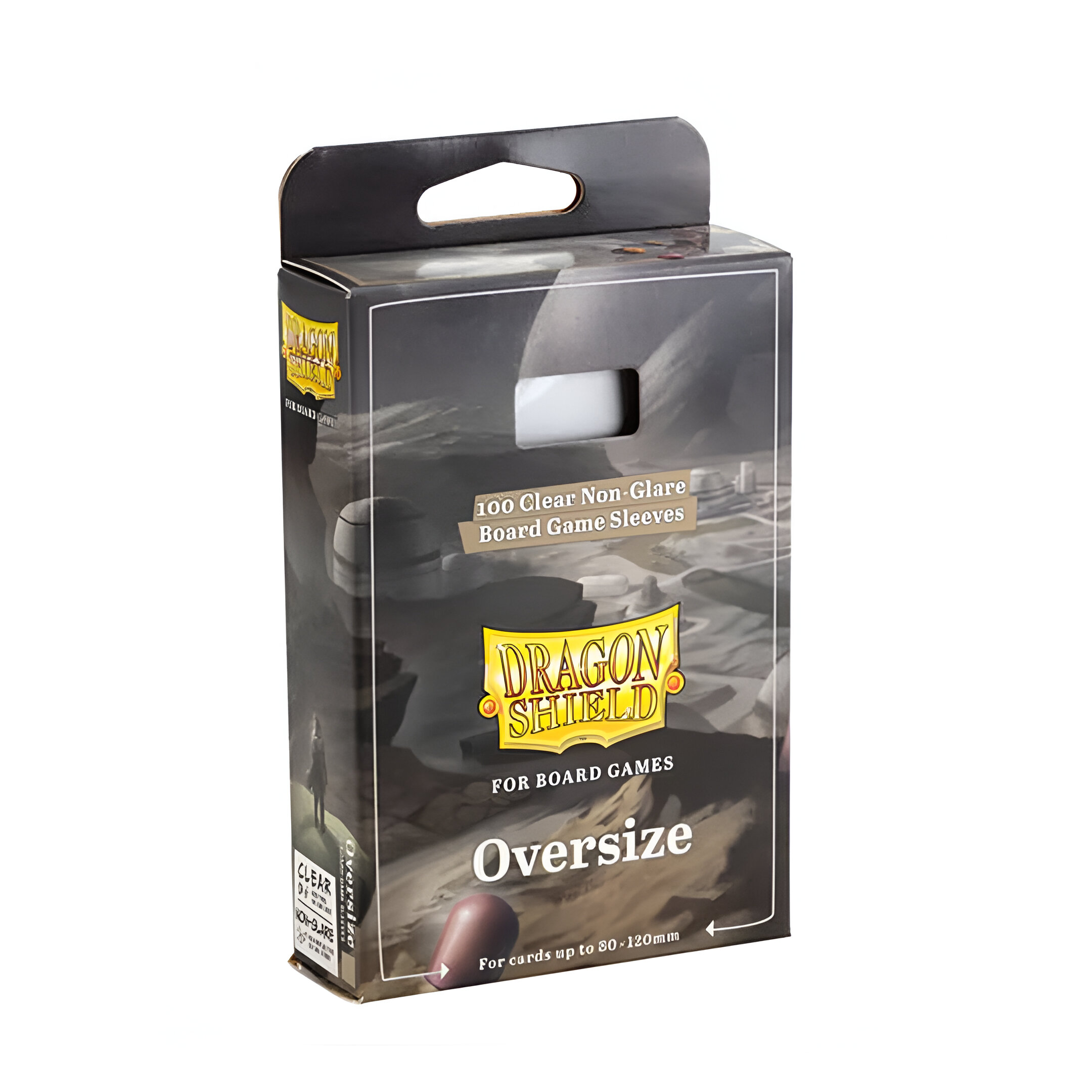
| Very large board-game cards | Up to 80 x 120 mm | Dragon Shield Board Game Sleeves Oversize | Useful for bigger specialty cards where standard board-game packs will simply not do. |
A few details from the product pages are especially helpful for buyers. The small non-glare sleeves are listed for cards up to 44 x 68 mm and described as typical for small cards in games such as Catan and Camel Up. The medium non-glare sleeves are listed for cards up to 57 x 89 mm and described as a fit for larger American-style board-game cards, including Ticket to Ride variants. The standard non-glare sleeves step into the familiar 63 x 88 mm range that also overlaps with many trading-card style formats.
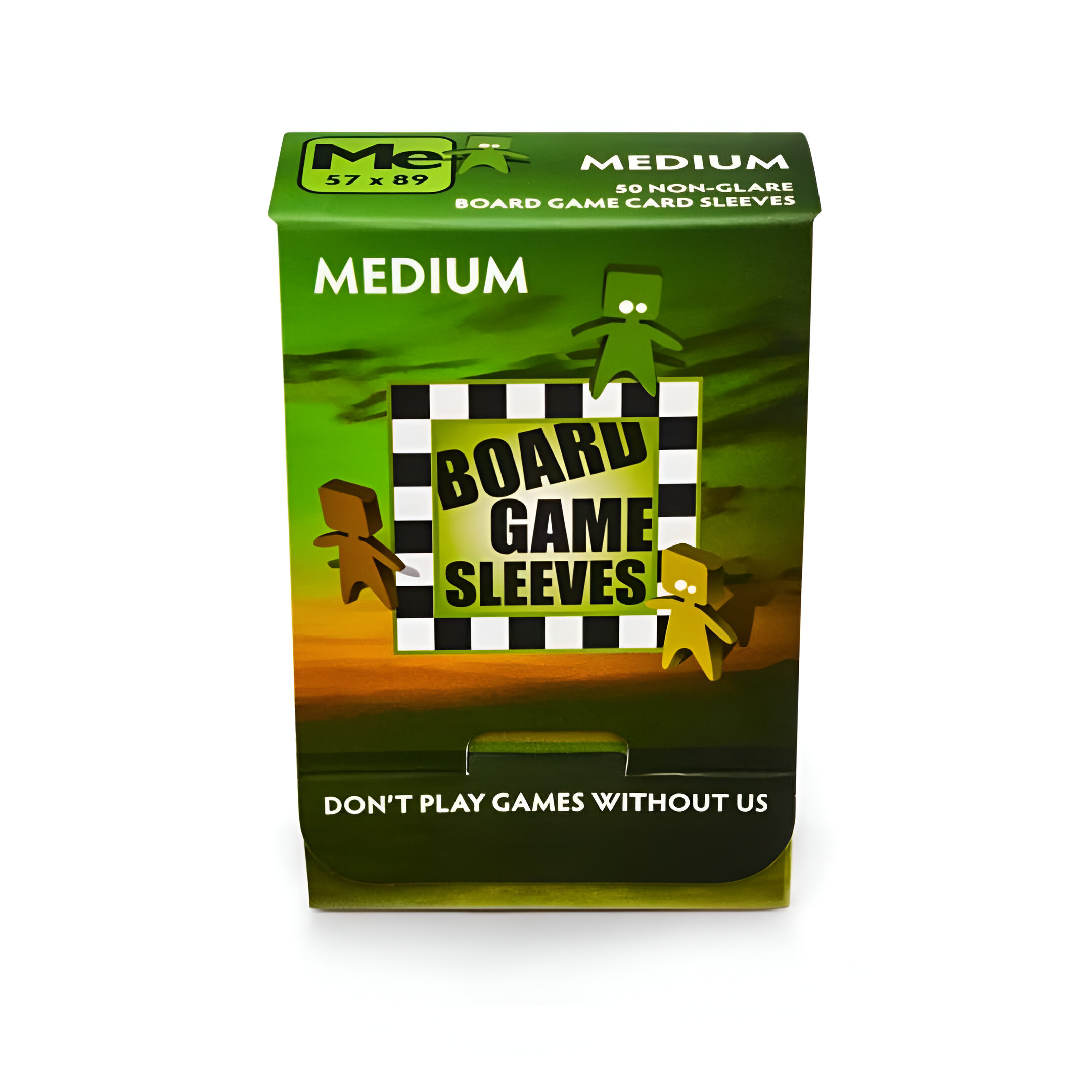
There is another practical difference worth noticing: those non-glare board-game sleeve listings are sold in packs of 50 and explicitly note that the cardbox stores 50 or more sleeved cards and can double as a card holder during play. That is a small but useful buying detail if you prefer compact storage rather than opening several loose packs at once.
When Dragon Shield Board Game Sleeves Make Sense
Once you know the size lane, the next question is whether you want a more premium sleeve experience. That is where the Dragon Shield range becomes useful. Dragon Shield’s board-game sleeve listings are not just about dimension. They also make a point of the feel and finish, especially the clear and non-glare pairing that lets you decide which side you prefer on the front of the card.
The live Tarot and Oversize examples are helpful because they show the larger end of the range clearly. Both are 100-sleeve packs rather than 50-sleeve packs, both describe the same clear and non-glare combination, and both are aimed at games with cards too large for ordinary standard-size buying habits.
That does not mean premium always means better. It means premium makes more sense when your game has lots of shuffling, large-format cards that are harder to replace, or enough cards that a 100-pack is simply more practical. If your main goal is tidy protection for one modest card set, the wider Sleeves category may already have the right answer without overcomplicating the decision.

A Simple Way to Build Your Sleeve Shortlist
The easiest buying method is to keep the shortlist small.
- Measure one card. Do not guess from memory.
- Match the measurement to a sleeve size. Start with the core Sleeves category and compare dimensions first.
- Decide whether you want basic protection or a more premium finish. This is where it can help to compare the wider sleeve range with Dragon Shield specifically.
- Check pack count against the actual game. Fifty sleeves and one hundred sleeves solve different problems.
If you already know your group enjoys games with larger card decks, it can also be worth planning sleeves alongside storage. Our recent guide on how to choose an Ultimate Guard deck box is written for TCG storage, but the same buying logic applies: fit first, then capacity, then finish. Accessories work best when they solve the exact job you have rather than the one that looked nicest in a product grid.
Likewise, if your gaming overlaps with deck-building or trading-card collecting, the broader TCG Accessories section and our guide on how to choose a TCG binder can help you build a more joined-up storage setup. Sleeves, binders and deck boxes do different jobs, but buyers often shop for them at the same time.
Mistakes to Avoid
Buying by game family alone. Two games in the same collection can still use different card formats, so product names are not enough on their own.
Using standard-size sleeves as the default answer. Standard is common, but it is not universal. Board-game cards vary much more than many buyers expect.
Ignoring pack count. A 50-pack can be ideal for a smaller set of important cards, while a 100-pack may be more practical for larger games or large-format components.
Treating glare and non-glare as a minor detail. Finish changes how cards look on the table and how they shuffle in practice, so it is worth deciding deliberately.
Board Game Sleeves FAQ
How do I know which board game sleeve size to buy?
Measure one card from the game in millimetres, then choose a sleeve that is listed for cards up to that size. That is more reliable than buying by artwork, box size or assumption.
Are standard-size sleeves suitable for every board game?
No. Standard-size sleeves are useful for some games, but many board games use smaller, narrower, taller or oversized cards. They are a common option, not a universal one.
What is the benefit of non-glare board game sleeves?
Non-glare sleeves can reduce reflections and often feel a little more controlled in play. They are especially worth considering if table lighting makes glossy cards awkward to read.
When should I choose a premium sleeve line such as Dragon Shield for board games?
It makes sense when you want smoother shuffling, a clearer finish choice, larger 100-sleeve packs, or protection for large-format cards that you expect to handle often.